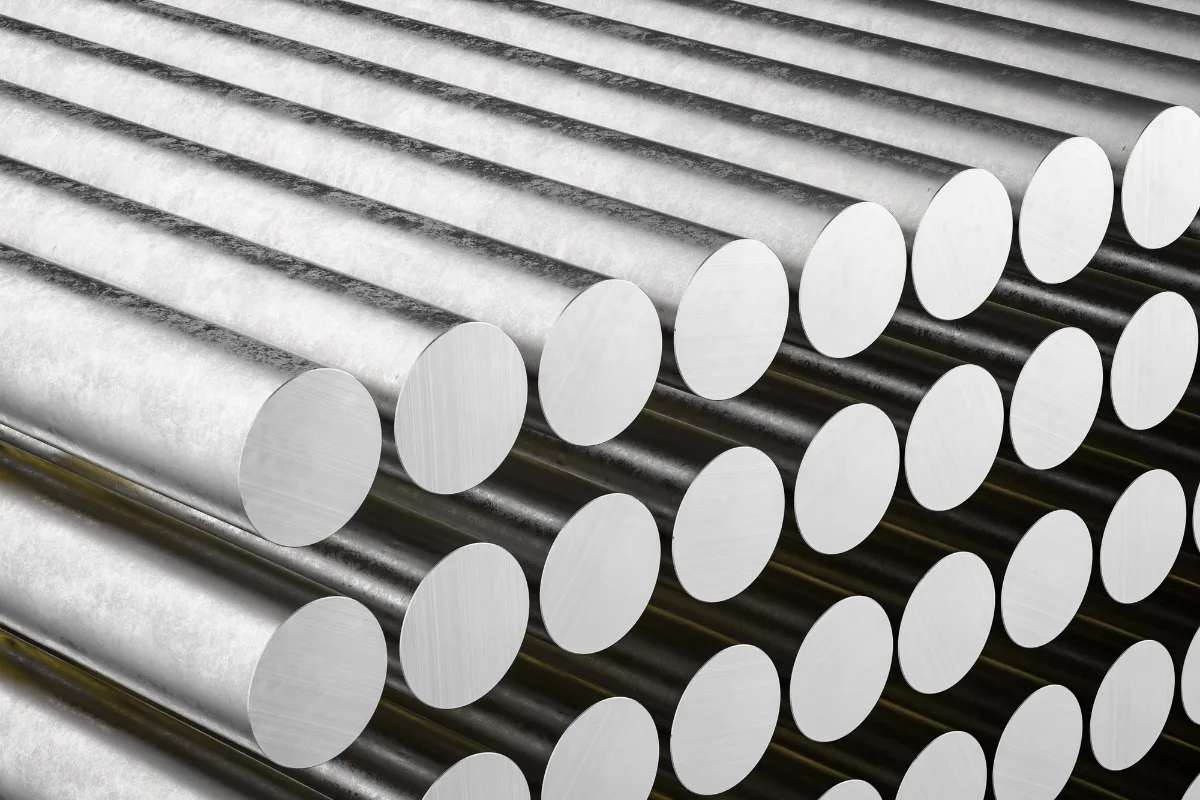
A dissolvable magnesium frac plug is a temporary barrier used during hydraulic fracturing. It needs to hold pressure while a stage is treated, then degrade enough to meet the planned flow and wellbore access requirements. Choosing one means checking both parts of that job: how long it remains functional, and what happens afterward.
What a frac plug does
In a typical plug-and-perf completion, the well is treated in stages. A plug isolates the section below it so pumping can build pressure in the next section above. Perforations provide flow paths through the casing into the formation.
The plug needs an anchor to stay in position and a seal to prevent fluid bypass. In a common ball-drop design, a ball lands on a seat and closes the passage through the plug. Conventional composite plugs are generally milled out after treatment. Dissolvable designs aim to reduce or eliminate that removal work by degrading in wellbore fluids. The result depends on the complete tool and its operating conditions. [1, 4]
The working life of a plug
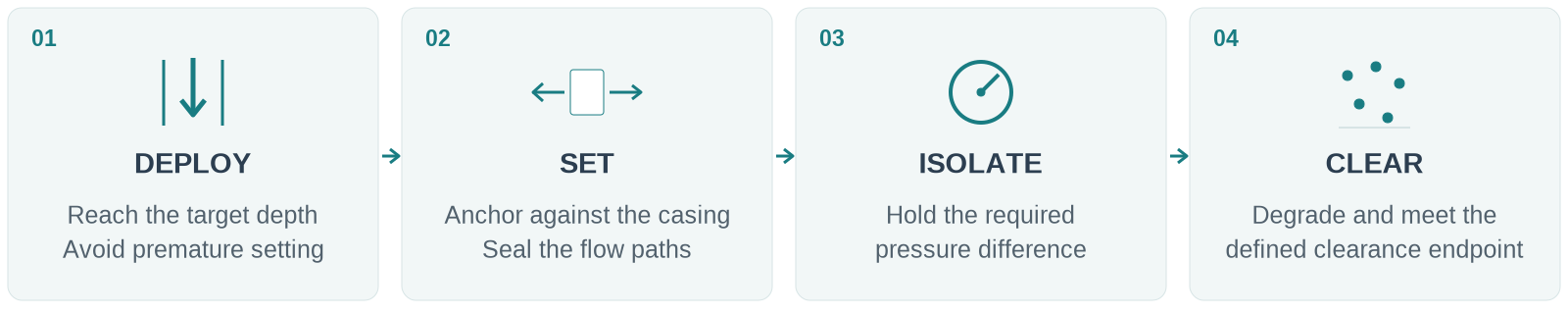
Deployment. The plug must reach its target without damage or premature setting. Casing restrictions, dimensions and the approved pump-down conditions matter.
Setting and isolation. The setting tool moves components into position. Slips grip the casing, the sealing element closes the space around the plug, and the ball closes the internal passage. Together, these parts must hold the required pressure difference for the required time. [1]
Degradation and clearance. Dissolvable parts progressively lose material and strength. Corrosion may start before treatment ends, so qualification must allow enough operating time, including the delays it is intended to cover. [2]
Where the magnesium is used
A frac plug is an assembly, not a single piece of magnesium. Depending on the design, magnesium alloys may be used in the body or mandrel, cones, slips, ball seat, ball and other structural parts. The seal, inserts and fasteners may use other materials.
A part that deforms during setting needs adequate ductility; a loaded part needs sufficient strength. A ball and a thin-walled component also have different shapes and fluid exposure. Ask which parts degrade, which may remain, and how the remaining material is expected to clear. [2, 3]
How magnesium dissolves
Here, dissolution is mainly an electrochemical corrosion process. Differences between the magnesium matrix and other phases in the alloy can form small galvanic cells in an aqueous environment. Alloy composition and processing influence both mechanical properties and corrosion behavior.
The reaction can generate hydrogen and corrosion products such as magnesium hydroxide. Products may remain as solids or deposits. A dissolvable material therefore does not automatically mean zero residue or immediate full-bore clearance. The engineering task is to control degradation while retaining the properties needed during treatment. [2]
Factors that affect the result
Temperature and fluid chemistry. Corrosion depends on the environment. Check the temperature, salt composition and concentration, dissolved gases and relevant treatment chemicals. One salinity number does not describe the entire test fluid. [2]
Fluid contact. Coatings and close contact between assembled parts can limit exposure to aqueous fluid. A freely exposed laboratory sample may therefore behave differently from a set plug. [1, 2]
Geometry. Exposed area, section thickness and the amount of material affect breakdown. Different shapes and sections of the same alloy need not clear together. [1, 3]
Manufacturing condition. Chemistry, microstructure, processing and heat treatment influence performance. A broad label such as dissolvable magnesium does not identify a particular grade or batch. [2]
Load and exposure time. The alloy operates under stress while exposed to fluid. Cracking can matter as well as gradual material loss. An unloaded immersion test alone does not establish a plug's pressure-holding life. [2, 3]
Material data and complete plug performance
Material tests and tool tests answer different questions. An alloy report can describe tensile properties, elongation and corrosion under stated conditions. It cannot by itself establish the pressure rating or clearance time of an assembled plug.
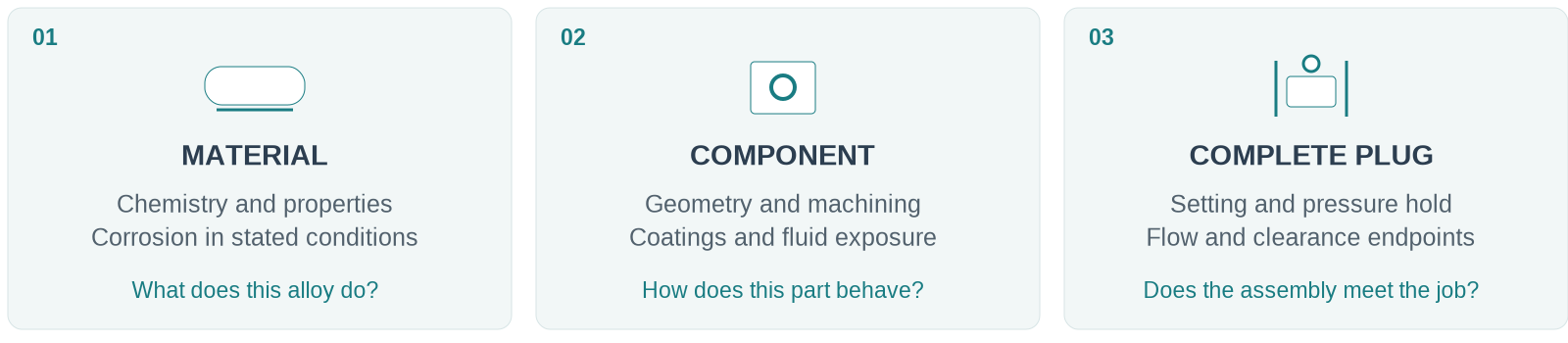
A corrosion rate expressed as mass loss per unit area per hour needs its sample dimensions, surface condition, fluid, temperature and test duration. For the complete plug, ask about casing fit, setting-tool compatibility, pressure difference, hold time, sealing and remaining restrictions. Published plug research separates material and dissolution work from setting and pressure-holding tests. [3]
Define the endpoint too. Loss of pressure isolation, restored flow, passage of a specified tool diameter and complete material breakdown are different outcomes. A report should say which was demonstrated.
Questions to ask before selection
- What temperature and fluid conditions were used, and how closely do they match the planned well?
- How long must the plug remain functional, including deployment and possible delays?
- Which parts use dissolvable magnesium, and what materials are used for the others?
- Do the results describe material samples, individual components or a complete set plug?
- What pressure difference and hold time were demonstrated under relevant conditions?
- How is clearance defined, and what solids or components may remain?
- Which production records connect the supplied material or plug to the tested version?
- What contingency is agreed if isolation is lost early or clearance takes longer than expected?
Dissolvable magnesium materials from Expectation
Expectation supplies dissolvable magnesium alloy raw materials, primarily rod stock, to completion-tool manufacturers in the United States and Canada. Our range includes grades with different combinations of strength, elongation and measured dissolution behavior, giving tool makers material options to evaluate for different component functions and operating conditions.
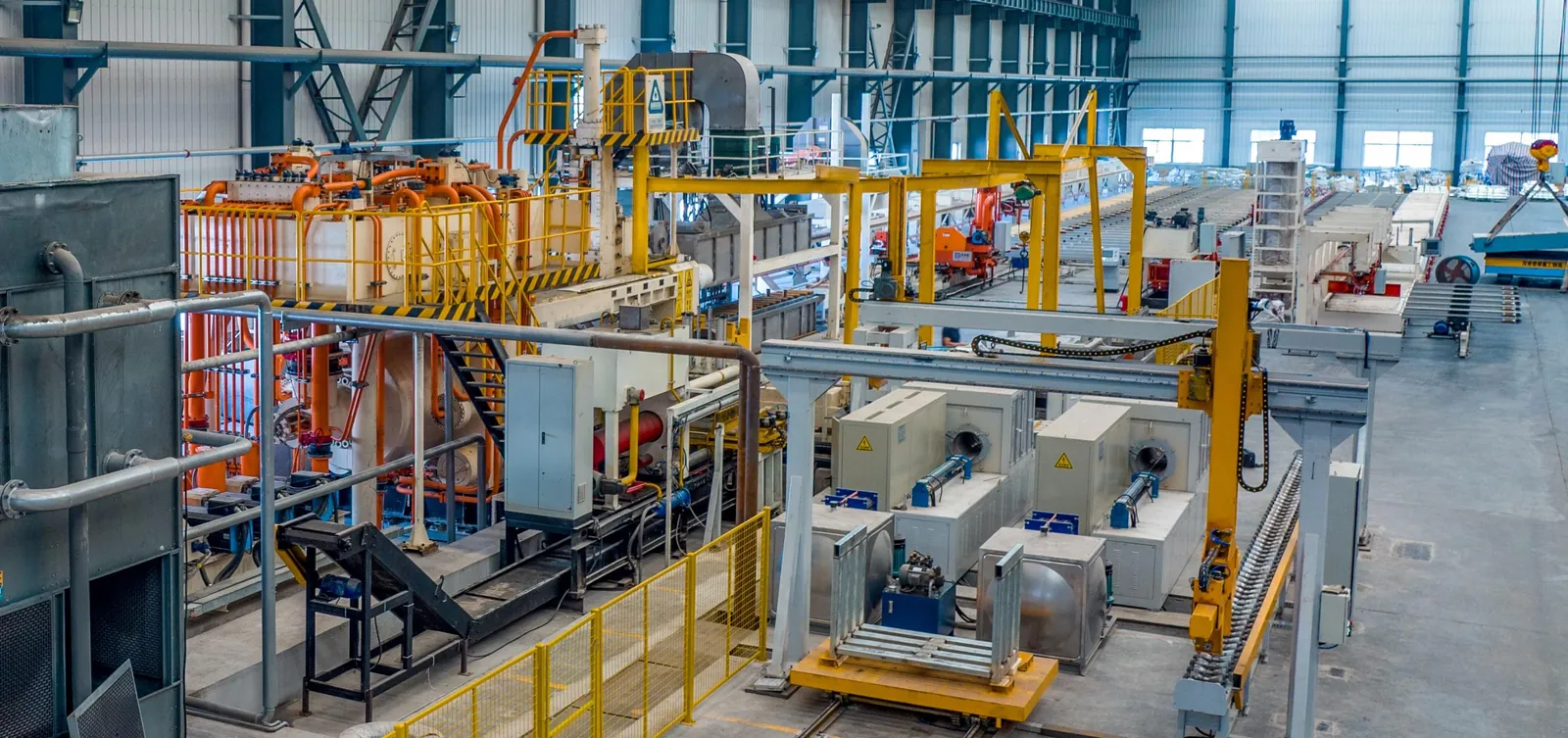
Our partner mill integrates primary magnesium production, alloying, casting, extrusion and testing. For frac-plug components, Expectation supports the material side of qualification with published grade data, sample coordination and lot-traceable mill test reports. Compare the reported test conditions with your intended application, then verify the machined component and complete tool. Tool performance depends on that design and qualification as well as the material.
Sources
- [1]The WellBoss Company. Plug Selection Guide 2025. Supplied 54-page PDF; pp. 13-21 cover deployment, anchoring and sealing, and pp. 29-32 discuss dissolution and material choices.
- [2]Zhao, L.; Dunne, T. R.; Ren, J.; Cheng, P. Dissolvable Magnesium Alloys in Oil and Gas Industry. IntechOpen, 2023. Sections 2.1-2.4, 4 and 5 discuss component requirements, corrosion, processing, coatings and failure modes. Read source
- [3]Zhang, P., et al. Study and Field Trials on Dissolvable Frac Plugs for Slightly Deformed Casing Horizontal Well Volume Fracturing. ACS Omega 7 (2022), 10292-10303. Sections 3.1 and 3.2 describe component design and distinct setting, pressure-holding and dissolution tests. Author affiliations include China University of Petroleum (East China) and research organizations. Read source
- [4]Halliburton. Illusion dissolvable frac plugs. Manufacturer description of zonal isolation, dissolvable materials and dependence on temperature and salinity. Its product claims are not Expectation material ratings. Read source